
Personalization at Scale Is a Signal Problem, and AI Just Broke the Signal
By Pitchlane team · March 13, 2024 ·

Personalization at scale means every person on a big list gets something clearly about them, at a cost per lead the campaign can still pay for. Everyone quotes the first half. The second half explains why AI first lines stopped counting: anything free to produce tells the reader nothing. In cold outbound, personalization is a signal of effort, and it’s worth exactly as much as it looks hard to fake.
The stat in every personalization deck is about shoppers
You’ve seen the number: 71% of consumers expect personalized interactions, and 76% get frustrated without them. It comes from a 2021 McKinsey survey of about 1,000 US adults, in a report about brands they already buy from. It’s a fine stat for a shoe retailer’s lifecycle team.
Your prospect is a VP of Sales who has never heard of you and is deleting cold emails between meetings. She doesn’t “expect” anything from you, and the absence of her first name has never frustrated her. So when a vendor slides that number into a pitch for an AI outbound tool, ask them what it has to do with a stranger’s inbox.
What is personalization at scale, in outbound?
It’s a costly signal delivered cheaply. A handwritten note works because everyone knows handwriting takes time. Merge tags stopped working the day everyone understood they take no time at all, and the AI first line is on the same road, only faster: the reader can’t always prove a bot wrote “congrats on the Series A,” and they’ve stopped caring.
So rank every tactic on two questions. How much does it cost you per lead? And how much effort does it look like from the other side of the inbox? The money is in the gap between them. That ladder on a 500-lead list looks like this, with a rep’s time priced at $30 an hour (our assumption, so swap in your own):
| Method | Your cost for 500 leads | What the prospect concludes |
|---|---|---|
{{firstName}} and {{company}} | Effectively zero | “I’m in a mail merge” |
| AI first line from their LinkedIn | A few dollars in credits | “A bot read my profile” |
| Copy written per segment | A few hours, once | “This person understands my problem” |
| Hand-recorded Loom per lead | 42 hours, about $1,250 | “Someone sat down and did this for me” |
| One recording, rendered per lead with Pitchlane | $67 for 500 video credits | “That’s my website. Someone did this for me” |
The bottom two rows look almost the same to the person watching and sit nearly 20x apart in cost. That gap is the whole business case for Pitchlane, so yes, we have a dog in this fight. Run your own numbers in the cold email ROI calculator and see which row pays.
Segment copy is the row people skip because it isn’t a software purchase. Do it anyway. Every other row sits on top of it, and a video over the prospect’s website can’t rescue a pitch aimed at the wrong problem.
How to send personalized videos at scale in B2B
Volume video goes wrong in the decisions you make before you hit render. Make these five.
One recording per segment, never one per list. Your agency-owner pitch and your in-house-SDR-manager pitch are different videos. Three segments means three takes, about ten minutes each.
Choose what sits behind you for each lead. The homepage is the default and it’s fine. A prospect’s LinkedIn profile hits harder when you’re selling to founders and agency owners, because their own face is on the screen. The rendered campaign below did exactly that. For a pitch about their pricing or hiring, point the link at that page. Any URL in your list can be the background.
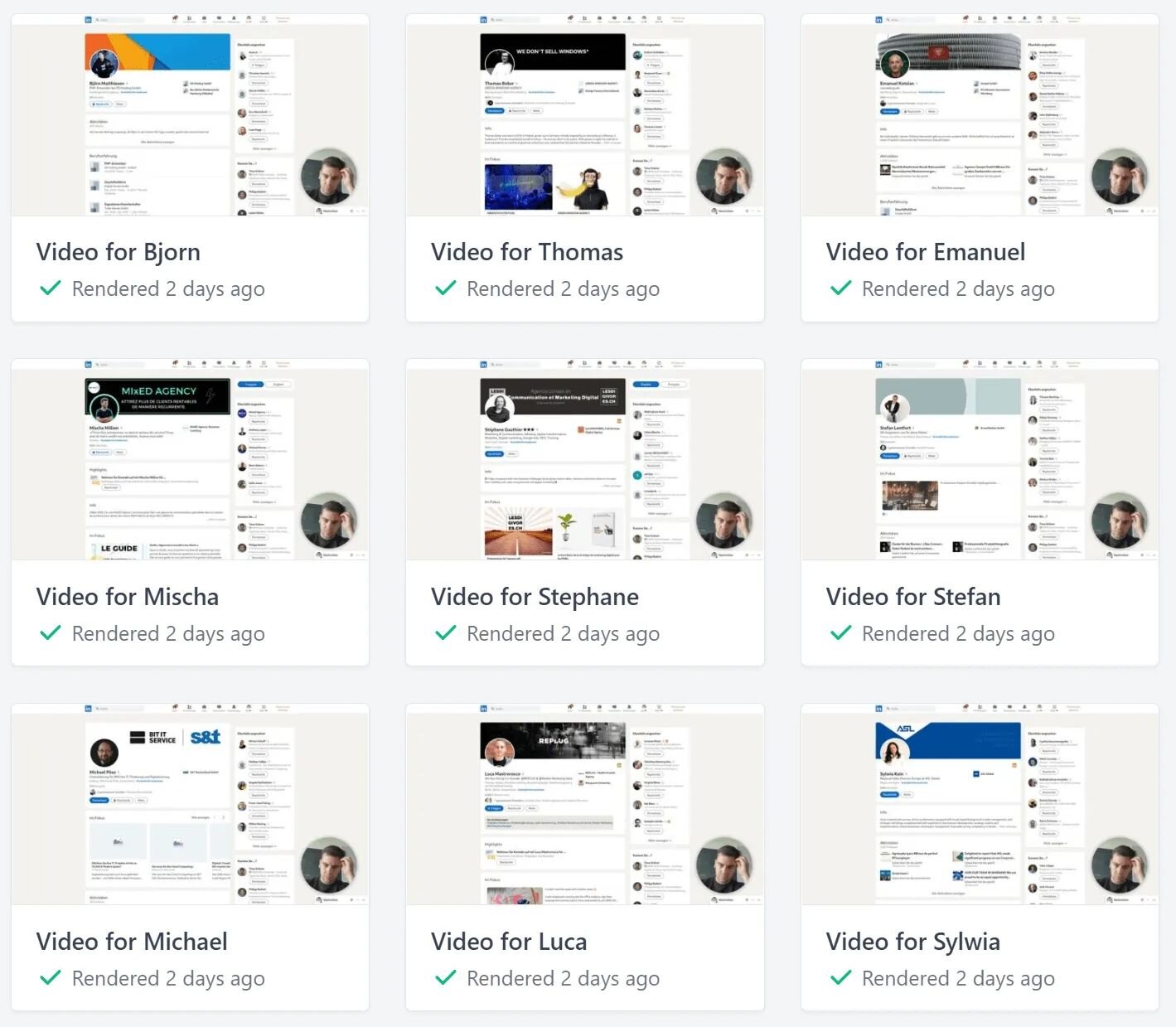
Make the first page dynamic and the next one yours. Open on their site for the first few seconds so the personalization lands, then cut to a static page: your case study, your dashboard, whatever proves the claim. Staying on their homepage for 90 seconds wastes the part of the video where you’re supposed to be selling.
Pick your deliverable. A landing page carries the video, a call-to-action and a booking calendar, and a GIF in the email gets the click. Video in the inbox itself doesn’t work: Gmail strips the HTML video tag outright. The dynamic email guide covers what inboxes will and won’t render.
Budget credits against the list you’d actually send. One credit covers up to two minutes of video, and 250 credits is $37. Every lead you cut for being off-target saves you 15 cents and a spam complaint.
Which platforms use AI to personalize video with CRM fields like industry and pain point?
Voice-clone tools such as HeyGen generate speech: they clone your voice or avatar and have it say a lead’s name or a field from your CRM. It’s a clever trick with a catch. The moment the prospect suspects the voice is synthetic, your costly signal flips into a cheap one, and you’ve told them the person pitching them won’t even record their own pitch. You also render and check a different audio track for every row.
Pitchlane goes the other way: your real recording, unchanged, over a background set per lead. Industry and pain point do their work upstream. Filter your CRM by industry, record the take for that industry’s pain, and let the background carry the individual. Their name and company land in the email and the video title. The prospect never hears a machine, because there isn’t one talking.
Personalized messaging at scale, without video
If you aren’t ready for video, spend your effort on the third row of that table. Write one message per segment, built on a trigger you can pull automatically, and stop paying for AI lines about people’s hobbies. The outreach campaign build has the steps and copy to send this week.
And if you landed here looking for abandoned-cart emails and in-session website personalization, you’re after a different discipline with its own tools, like Klaviyo and Braze. Everything above is about strangers and cold lists.
Bottom of the ladder or top of it
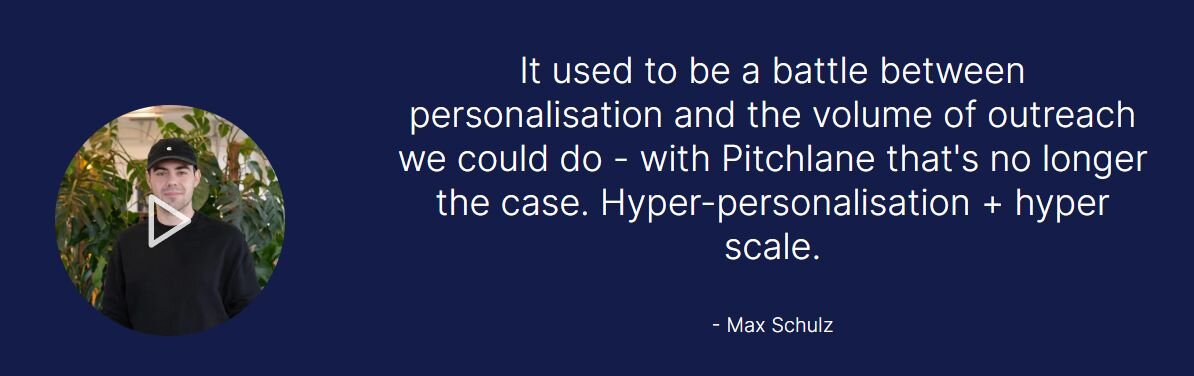
Max Schulz ran into the same trade-off everyone in outbound does, and he said it better than we can:
1,000+ companies now run their outbound this way. Record one pitch and put it over 250 prospects’ websites on the 14-day free trial, then see which row of that table your replies say you belong in.
Questions
Frequently asked questions
What is personalization at scale?
Personalization at scale means every person on a large list gets a message that is visibly about them, at a cost per lead the campaign can still afford. In cold outbound it is a signal of effort. A tactic works for exactly as long as it looks hard to fake, which is why merge tags died and AI first lines are dying now.
What is an example of personalization at scale?
One recording of a 60-second pitch rendered over 500 prospects' websites is the cleanest example. Each prospect sees their own homepage behind the presenter, their name in the email and title, and a landing page with a booking calendar. It costs $67 in Pitchlane credits and looks, from the inbox, like someone spent an afternoon on them.
How do you send personalized videos at scale in B2B?
Record one take per segment, choose which page sits behind you for each lead, keep the first background dynamic and cut to your own proof page, then deliver a GIF and a link rather than a video in the inbox. Gmail strips the video tag, so the hosted page is where it plays. Pitchlane renders the whole list from the one recording.
Which platforms personalize video with CRM fields like industry and pain point?
Sendspark, Tavus and HeyGen generate synthetic speech from CRM fields. Pitchlane uses the fields upstream: filter by industry, record the take for that industry's pain, and let each lead's website carry the individual part. The prospect hears your real voice, and nothing synthetic can give the game away.
Is personalization at scale worth the cost?
Yes, as long as you are paying for the kind the prospect can see. Our 500-lead ladder puts hand-recorded video at roughly $1,250 of rep time and the rendered version at $67, with the same effect on the reader. Spending on AI first lines is the row that is not worth it, because the signal is already gone.
What is the difference between personalization and personalization at scale?
Personalization is what one rep does for one account. At scale, it is the same effect delivered to every lead by software, without a human in the loop per message. The trick is to keep the per-lead element visibly costly to fake while making it free for you to produce.
What is the best tool for personalization at scale?
For cold outbound, Pitchlane for the video layer on top of Instantly or Smartlead, with Clay or Apollo feeding the list. For your own customers and subscribers, it is a different category: Klaviyo, Braze or HubSpot. Buying a lifecycle platform for cold email gets your account closed.
What is in-session personalization?
In-session personalization changes a website while a visitor is on it, based on their behaviour or source. It belongs to ecommerce and product teams, not to outbound. If a cold prospect lands on a page built for them, the personalization happened before the session, when the page was rendered for that lead.
Does personalized messaging at scale work without video?
Yes, when the message is written per segment around a trigger you can pull automatically. That is the row most teams skip because it is not a software purchase. Video sits on top of it; it cannot rescue a message aimed at the wrong problem, and a strong segment message with no video still beats a generic one with AI lines.
How does AI affect personalization at scale?
AI made the cheap tier free, which killed its value. A first line about a prospect's LinkedIn post now costs a fraction of a cent, so everyone sends one and it tells the reader only that your Clay table has a GPT column. The effort moves to what AI cannot fake: your real face and voice over their own site.